Ronda Rousey's Armbar: The Signature Submission That Defined an Era
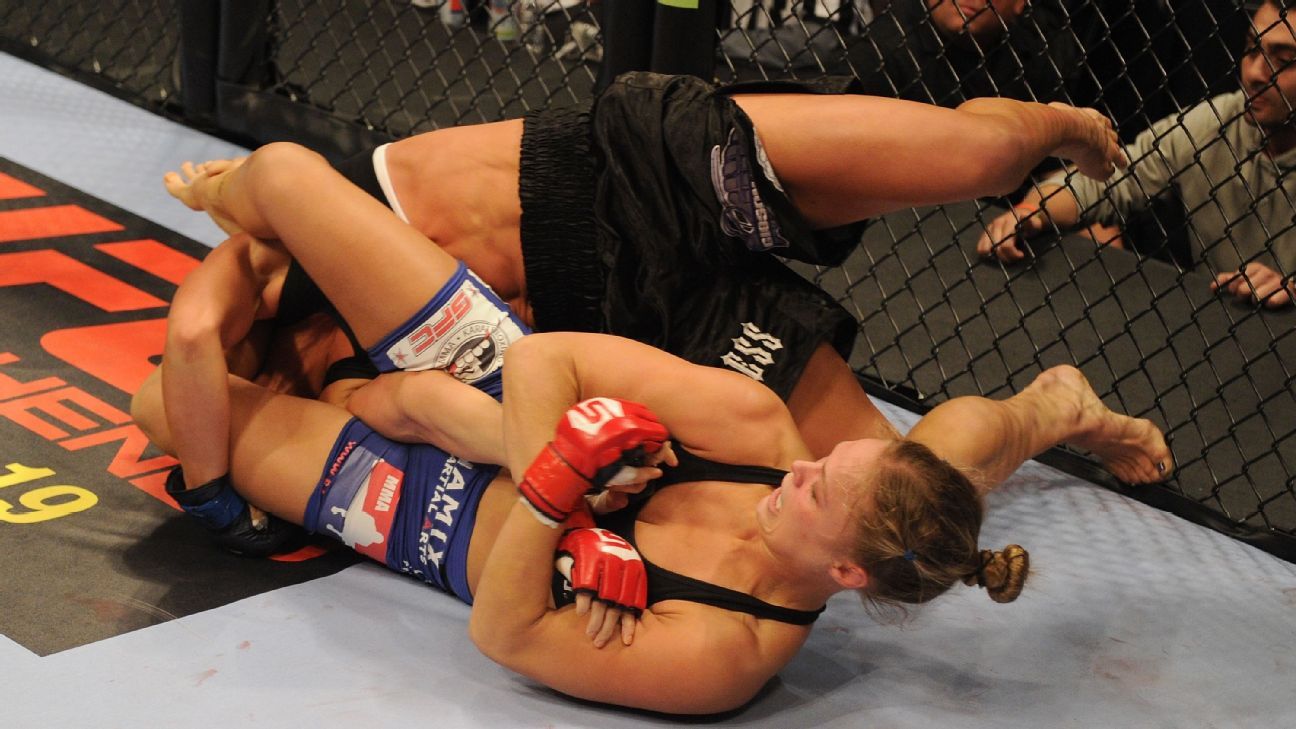
For a brief, dazzling period, one woman stood above all others in the nascent world of women's MMA, captivating audiences with a ferocity rarely seen. That woman was Ronda Rousey, and her weapon of choice was the armbar. It wasn't just a submission; it was a statement, a guarantee, a chillingly efficient end to nearly every one of her early contests. Fans knew it was coming, opponents dreaded its inevitability, and yet, very few could stop it. Rousey's juji-gatame, or straight armlock, became synonymous with her name, propelling her to unprecedented superstardom and forever changing the landscape of combat sports. But what made her armbar so uniquely devastating, and could such a singular focus still yield victory in today's evolved fight game?
The Mechanics of 'Rowdy' Ronda's Signature Submission
At its core, the armbar is a fundamental judo technique, and it was Rousey's Olympic judo background that provided its unshakeable foundation. What set her apart wasn't just her mastery of the move itself, but her seamless, almost predatory ability to transition into it. From a clinch, a takedown, or even a scramble, Ronda Rousey possessed an innate sense of timing and leverage to isolate an opponent's arm. Her setups were often quick and explosive, frequently stemming from a body lock or a hip toss that would land her directly in a dominant position, often side control or mount, from which she could then swiftly attack the arm. Many of her UFC finishes, including those against seasoned veterans like Miesha Tate (twice) and Cat Zingano, showcased her ability to transition from a standing throw directly to the mat, securing the armbar with astonishing speed and precision.
Her execution was textbook: control the opponent's wrist, step over their head, pivot her hips, and extend her own body, using her legs to trap the head and torso while hyperextending the elbow joint. The pressure she generated was immense, often forcing lightning-fast taps or, in some harrowing instances, dislocating elbows. It wasn't just brute strength; it was a perfect storm of technical perfection, explosive power, and an unyielding will to finish. Opponents like Sarah Kaufman and Alexis Davis, among many others, found themselves caught in this inescapable web, their arms twisted into unnatural angles, their nights ending abruptly and painfully. This singular, dominant technique became her calling card, a testament to the power of specialized excellence.
Legacy and the Hypothetical Return: Would the Armbar Still Dominate?
Ronda Rousey's meteoric rise and subsequent fall serve as a fascinating case study in the evolution of MMA. While her armbar was virtually unstoppable in her initial reign as the UFC Women's Bantamweight Champion, the sport, and its athletes, have adapted. Fighters are now far more well-rounded, with comprehensive defensive grappling skills and sophisticated striking arsenals designed to counter specific threats. Her later losses to Holly Holm and Amanda Nunes highlighted vulnerabilities that were not apparent when her armbar was king. Holm's masterful striking and footwork prevented Rousey from closing the distance and engaging in her preferred grappling exchanges, while Nunes showcased devastating power and excellent takedown defense.
If Ronda Rousey were to make a hypothetical return to the Octagon today, relying solely on her signature armbar, the path to victory would be significantly more challenging. Modern women's bantamweights like Julianna Peña, Raquel Pennington, and Mayra Bueno Silva possess diverse skill sets, strong submission defense, and powerful striking that could exploit any perceived gaps in a singular game plan. While her armbar would always remain a potent threat, it would likely need to be integrated into a much more diversified offensive strategy, perhaps coupled with improved striking defense or a broader range of takedowns and ground control. The sport has moved beyond the era where one dominant technique, no matter how perfectly executed, could guarantee continued supremacy.
Even without another fight, Ronda Rousey's impact is undeniable. She broke barriers, shattered expectations, and inspired a generation of female athletes. Her armbar remains one of the most iconic submissions in MMA history, a symbol of her unparalleled dominance during a transformative period. While the landscape of combat sports has shifted, the legacy of 'Rowdy' Ronda and her unbreakable armbar endures, reminding us of the power of mastering a single, devastating technique. Whether she ever steps back into the cage or not, her place in the pantheon of combat sports legends is secure, forever linked to that unforgettable, fight-ending armlock.
Train Like the Pros
Want to train like the pros? Braule uses AI to analyze your strikes in real-time. Track every punch, hook, and uppercut with precision coaching that adapts to your style.
Download Braule Free